Why Most First Pottery Pieces Fail at the Wheel, Not the Kiln
A collapsed or cracked piece often gets blamed on the kiln, but for most beginners, the piece was already doomed at the wheel, long before it ever reached the fire.

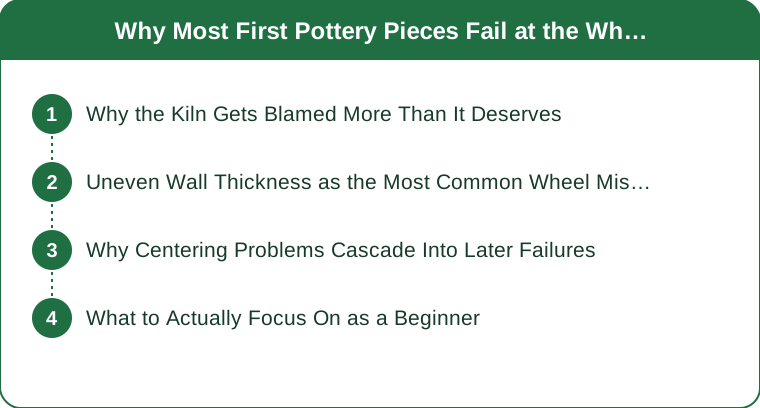
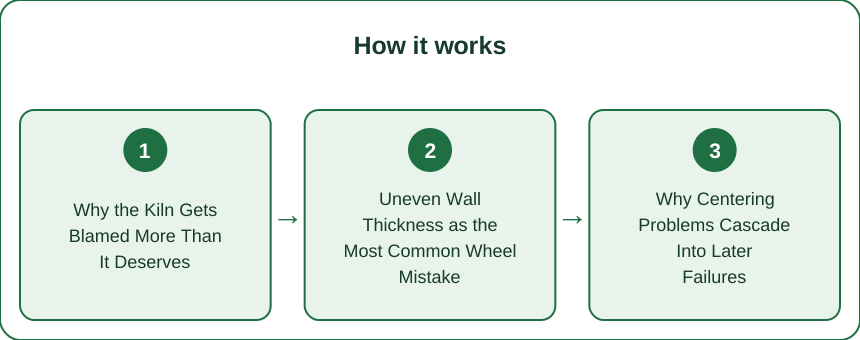
Why the Kiln Gets Blamed More Than It Deserves
The misconception: a failed piece emerging from the kiln damaged, which naturally makes the kiln feel like the point of failure, even though the kiln is usually just revealing a structural problem that was set at the wheel stage.
Uneven Wall Thickness as the Most Common Wheel Mistake
The actual cause: uneven wall thickness created during throwing being the single most common reason pieces crack or collapse later, since thin and thick sections dry and shrink at different rates, creating stress the kiln simply exposes.

Why Centering Problems Cascade Into Later Failures
The root cause behind the wall issue: clay that wasn’t properly centered at the very start of throwing making even wall thickness nearly impossible to achieve no matter how careful the later shaping is, meaning the failure point is often the first thirty seconds on the wheel.
What to Actually Focus On as a Beginner
The practical priority: spending disproportionate practice time on centering specifically, even before worrying about final shape, since a well-centered piece with even walls survives drying and firing far more reliably than a beautifully shaped piece with uneven walls, and the frame (most beginner pottery failures trace back to uneven walls from poor centering at the wheel, not the kiln — the kiln just makes an existing structural problem visible.)
A collapsed or cracked piece often gets blamed on the kiln, since that’s where the damage becomes visible, but the kiln is usually just revealing a structural problem that was set much earlier, at the wheel. Uneven wall thickness created during throwing is the single most common reason pieces crack or collapse later, since thin and thick sections dry and shrink at different rates, creating stress the kiln simply exposes rather than causes. That uneven thickness usually traces back further, to clay that wasn’t properly centered at the very start of throwing, which makes even wall thickness nearly impossible to achieve no matter how careful the later shaping is, meaning the real failure point is often the first thirty seconds on the wheel. Spending disproportionate practice time on centering specifically, even before worrying about final shape, pays off more than any other beginner focus, since a well-centered piece with even walls survives drying and firing far more reliably than a beautifully shaped piece with uneven walls.
Keep Reading
This article is for general informational and styling purposes only. Fit, sizing, and product availability may vary.