Hand-Building Pottery at Home: Starting Clay Work Without a Wheel or Kiln
Quick Answer: You can start pottery at your kitchen table this weekend with a $12–15 block of air-dry clay and a butter knife. Learn three techniques in order — pinch pot, coil, then slab — and you’ll have covered essentially all of hand-building. The one honest limit: air-dry clay is decorative only, never food-safe or waterproof. When you want real functional stoneware, community studios will fire home-built pieces for a few dollars each.
The pottery wheel is the thing everyone pictures, and it’s the newest part of the craft. People were making pots by hand for thousands of years before someone put clay on a spinning disc.
Which is convenient, because a wheel costs several hundred dollars and takes up a corner of a room, and a block of clay costs less than lunch.

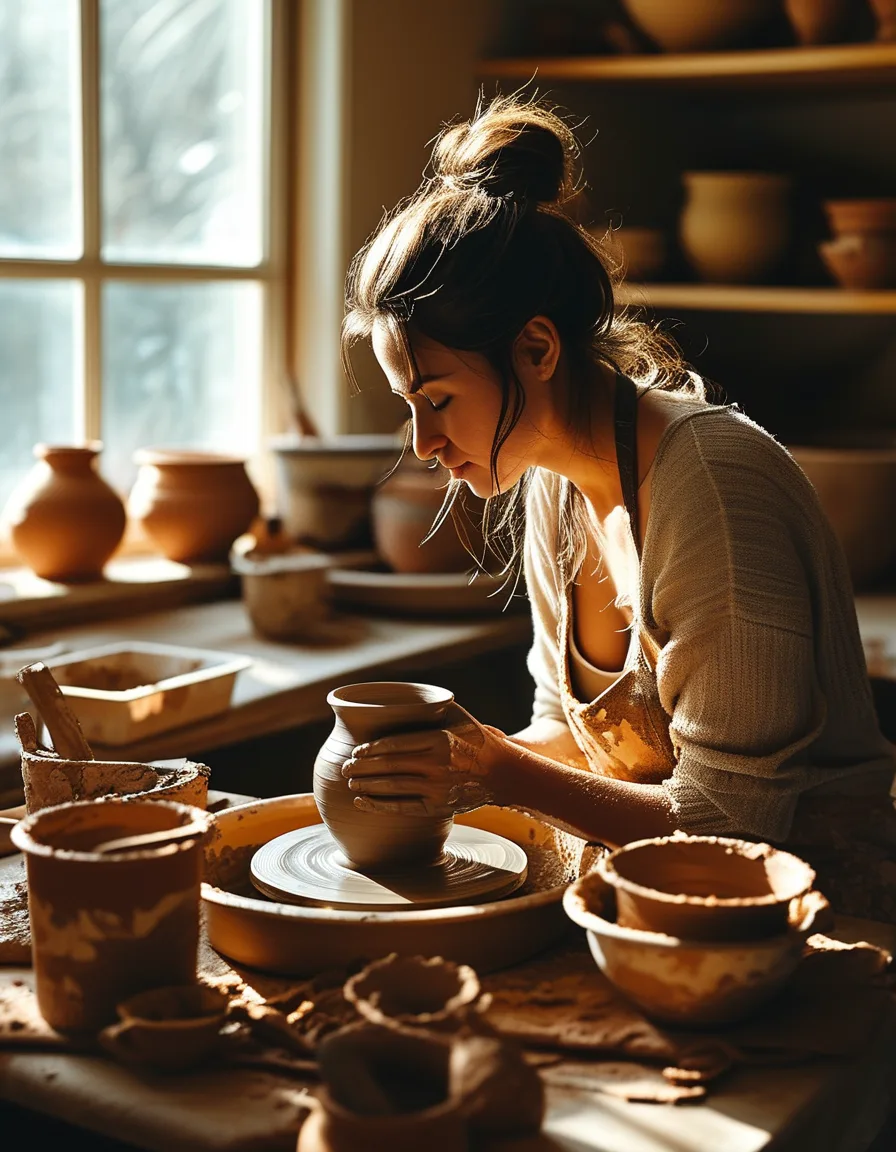
Can you do pottery without a kiln?
Yes, with tradeoffs you should know before you start.
Air-dry clay — the no-fire entry point. Modern air-dry clays are genuinely decent to work with and cost around $12–15 for a block that’ll make several pieces. It hardens over 24–72 hours at room temperature.
The honest limit: it is decorative only. It is not waterproof, not food-safe, and not durable in the way fired ceramic is. Planters need a plastic liner. Trinket dishes, ornaments, wall pieces, jewelry holders — all fine. Mugs and bowls you’d actually use — no. Sealing with varnish improves water resistance but doesn’t make it food-safe.
Polymer clay — oven-bakeable in a standard home oven at around 130°C. Excellent for small work: jewelry, magnets, miniatures, beads. Worth knowing it’s a plastic-based material, not clay in the ceramic sense — a different craft with its own techniques.
Real clay plus community firing — the best of both. Build stoneware or earthenware pieces at your kitchen table, then take the bone-dry pieces to a local community studio that offers per-piece firing. Rates vary but are often a few dollars per piece. Many studios also let you glaze there. This is the path to genuinely functional, food-safe pottery without owning a kiln, and it’s the most under-known option in the hobby.
Tools: a butter knife, a fork, a skewer, a rolling pin, and a sponge cover everything. When you’re committed, roughly $10–15 adds a wire tool, a rib, and a needle tool.
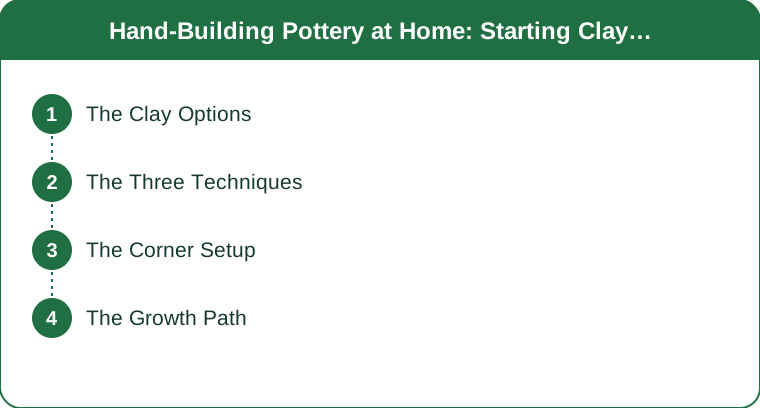
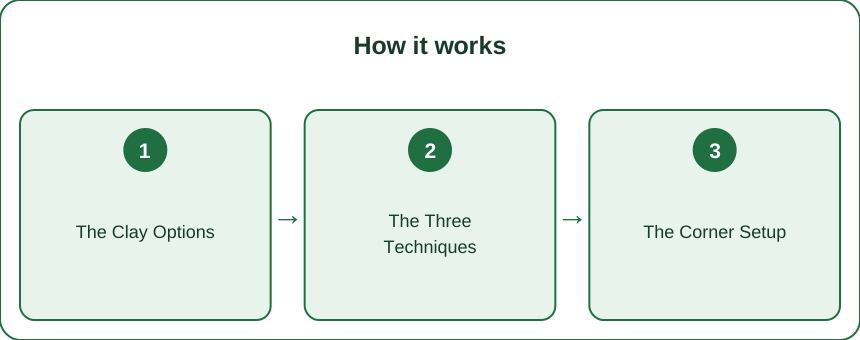
The three techniques, in order
1. Pinch pot. Roll a ball of clay, press your thumb into the center, then pinch and rotate — thumb inside, fingers outside — working the wall evenly upward. Aim for walls about 6–8 mm thick throughout.
This is the technique that teaches you what clay feels like, and even wall thickness is the whole lesson. Progress by making a set of nesting bowls.
2. Coil building. Roll ropes of clay about the thickness of your finger and stack them in a spiral, blending each new coil into the one below on both the inside and outside. This is how large vessels were made for millennia, and it’s the route to anything taller than your hand.
Aesthetic choice: blend the coils smooth for a seamless vessel, or leave them visible as a texture. Both are legitimate; the visible-coil look is having a moment.
3. Slab construction. Roll clay flat with a rolling pin between two wooden guides (chopsticks work) so the thickness is even, then cut shapes and join them. This is how you get boxes, mugs, plates, and anything with flat planes.
The join technique matters here and it’s non-negotiable: score and slip. Scratch a crosshatch into both surfaces to be joined, apply slip (clay mixed with water to a yogurt consistency) as glue, press together, then blend the seam. Skip this and your piece will crack apart at the join as it dries. Every single time.
Surface work: press lace, leaves, or stamps into soft clay for texture. Carve at the leather-hard stage — firm but not dry. For air-dry work, acrylic paint plus a matte or gloss sealer is the standard finish.
The three-project ladder: a pinch dish, then a coil planter, then a slab mug or ornament. That arc teaches you essentially everything hand-building has to offer.
Drying discipline: dry slowly and evenly under loosely draped plastic for the first day or two. Fast, uneven drying is the number one cause of cracks. Patience is a technique here, not a virtue.
5 mistakes everyone makes with home clay
1. Skipping score-and-slip. Handles fall off mugs. Slab boxes split at the corners. It always happens at the join, and it always happens during drying, which is maximally annoying because you thought you were done.
2. Walls that are too thick or uneven. Thick clay dries unevenly and cracks. Uneven walls crack at the thin spots. Aim for consistent 6–8 mm and check by feel.
3. Drying too fast. Clay near a radiator or in direct sun will crack. Loose plastic, room temperature, and 24–72 hours of patience.
4. Adding water instead of slip. Water alone doesn’t bond clay, it just makes a slippery mess. Slip is clay plus water and it’s what actually glues.
5. Expecting air-dry clay to hold liquid. It won’t. Every year, thousands of people make a lovely air-dry mug, seal it, and watch it soften in the sink. Planters need liners; drinking vessels need firing.
The kitchen-table studio setup
Work surface. A board covered in canvas or an old cloth. Clay sticks badly to bare tables and the canvas also stops your slab from sticking as you roll. A portable board is what makes this a pack-away hobby rather than a household negotiation.
Tools. Knife, fork, skewer, rolling pin, sponge, small bowl of water, and a cup of slip for joins.
Mess management. Wipe with a damp cloth rather than sweeping — dry clay dust is best not made airborne, particularly with real clay. Don’t wash large amounts of clay down the sink; it settles and blocks drains. Let clay water settle in a bucket, pour off the clear water, and bin the sludge.
Storage. Works in progress under plastic, unused clay wrapped airtight in its bag inside a sealed container. The whole studio fits in a shoebox and a cupboard.
Household diplomacy. The table has to become a table again by dinner. Session-based, packs away, and — genuinely — kids are very good at this and will happily do it with you.
Where it leads
Skills transfer completely. Hand-building competence — clay feel, joining, form sense, drying judgment — carries straight into studio work. People who hand-build at home first do noticeably better in their first wheel class.
Community studios are the graduation step. Establishing a firing relationship with a local studio gets you real stoneware, real glazes, and usually a lot of good advice. Ask about per-piece firing rates; many people don’t know it’s offered.
It makes excellent gifts. Ring dishes, ornaments, and small planters beat anything store-bought at the same price, and the slightly wonky ones are the ones people keep.
It’s a good screen-free hour. Clay demands hands and attention and nothing else, and there’s something specifically useful about a craft where perfectionism is quietly impossible.
A few practical cautions
Avoid breathing dry clay dust — wipe surfaces damp rather than sweeping, especially with real clay. Don’t put clay down the drain. Air-dry and polymer clay pieces are decorative and should never be used for food or drink regardless of sealant, and only properly fired and food-safe-glazed ceramic is safe for eating and drinking. Follow the manufacturer’s temperature instructions exactly when baking polymer clay, and ventilate the kitchen while you do.
FAQ
Can you make pottery without a wheel?
Absolutely — hand-building predates the wheel by thousands of years. Pinch, coil, and slab techniques cover essentially every form you’d want to make, and many professional ceramicists work exclusively by hand.
Is air-dry clay food safe?
No. Air-dry clay is not food-safe or waterproof, and sealing it doesn’t change that. Use it for decorative pieces, ornaments, jewelry dishes, and planters with a liner. For anything you’ll eat or drink from, you need real clay fired in a kiln with a food-safe glaze.
How do you start hand-building pottery at home?
Buy a block of air-dry clay ($12–15), cover a board with cloth, and make a pinch pot: roll a ball, press your thumb in, pinch and rotate to even the walls. Dry it slowly under loose plastic for 24–72 hours, then paint and seal. That’s a complete first project in an evening plus drying time.
TL;DR:
- $12–15 block of air-dry clay, a butter knife, and a covered board is the entire barrier to entry.
- Learn in order: pinch pot → coil → slab. That’s all of hand-building.
- Score and slip every join, always. It’s where pieces fail.
- Even walls at 6–8 mm, dried slowly under loose plastic for 24–72 hours.
- Air-dry clay is decorative only — never food-safe or waterproof, sealed or not.
- For functional stoneware, build at home and pay a community studio to fire per piece.
- Wipe clay dust damp, never sweep it, and don’t put clay down the drain.
Keep Reading
This article is for general informational and styling purposes only. Fit, sizing, and product availability may vary.