How Much Do Your Hands Change the Clay on the Wheel?
Quick Answer: Your hands change clay in three ways: heat, which softens the clay body and speeds water loss; water film, which controls how much friction you have; and grip pressure, which is the one you actually think about. Warm hands make clay go floppy sooner and shorten your working window by minutes. Cool your hands in the water bucket between pulls, and use less water rather than more.
You throw two pots twenty minutes apart from the same bag of clay.
The first centres beautifully. The second collapses on the third pull, and you assume you did something wrong.
You might have — but there is a decent chance the difference is sitting at the ends of your arms, and it changed between the two attempts without you doing anything at all.
Does hand temperature really change how clay behaves?
Yes, and more than people expect.
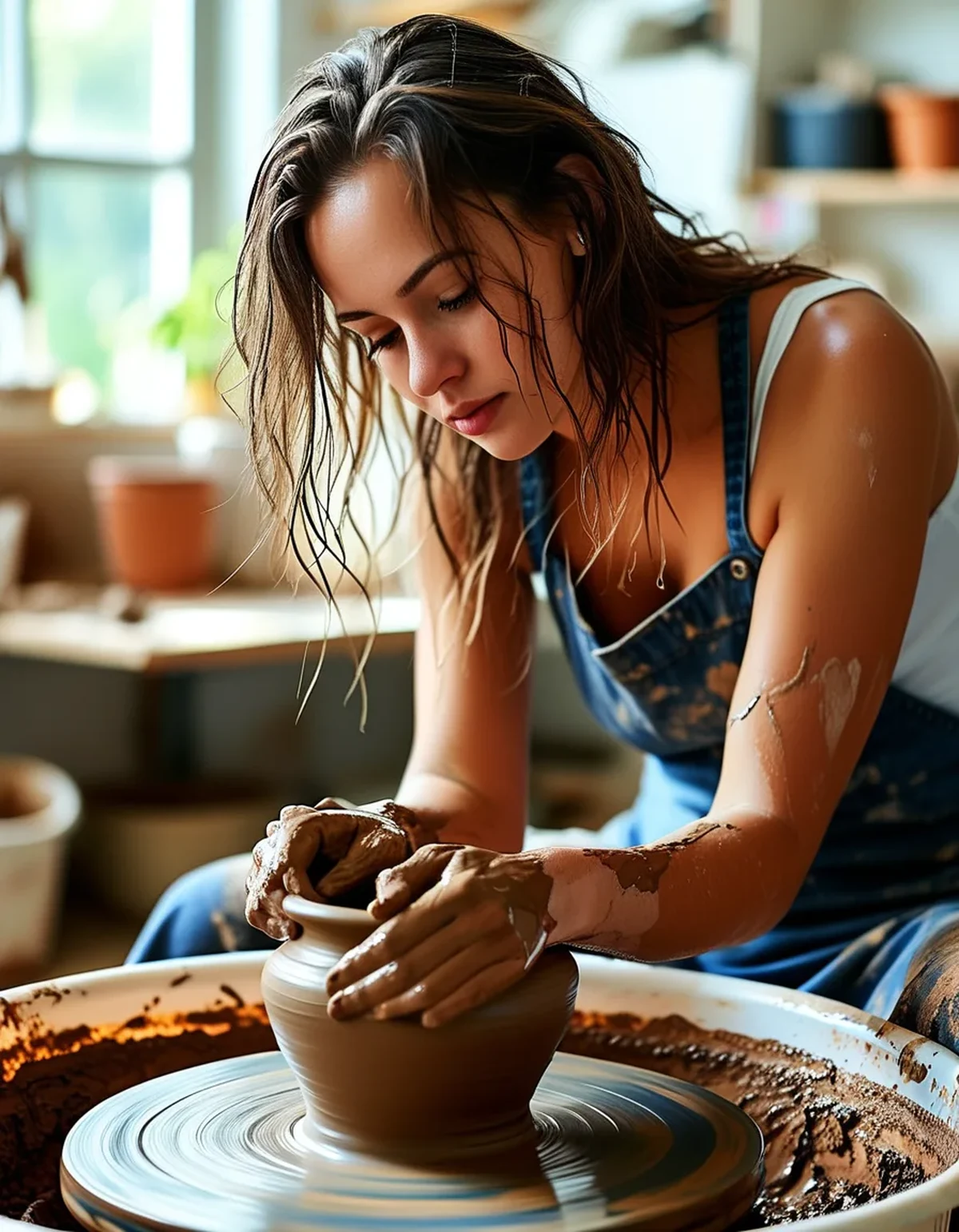
Clay plasticity is a function of water content and temperature. Warmer water is less viscous, so it moves through the clay body more easily and the whole mass gets softer and more willing to deform. Your hands sit at roughly 30 to 34°C at the surface, and studio clay is usually somewhere between 15 and 20°C.
Every minute your hands are wrapped around a spinning wall, you are heating it. On a tall thin cylinder — where wall thickness might be 6 or 7mm — that heat reaches all the way through quickly.
The practical effect: a potter with naturally warm hands gets a shorter working window before the wall goes floppy. Someone with cold hands can take an extra pull on the same clay.
This is also why the second and third pot of a session sometimes feel different from the first. Your hands are warmer after ten minutes of work than they were when you sat down.
Why does the same clay feel stiffer some days than others?
Because three variables move independently and you only control one.
Studio humidity. In a dry room, water evaporates from the surface of the clay faster than it migrates outward from the centre. That gives you a stiff skin over soft clay — the combination that produces sudden, surprising collapses.
Clay body temperature. Clay stored against an outside wall in September is genuinely colder than clay stored in the middle of the room. Cold clay is stiffer and needs more force to centre, which tires your hands, which then makes everything else harder.
Your own hands. Cold hands after a cold commute behave differently from warm hands an hour into a session.
Beginners usually blame the clay, and experienced potters usually blame the room. Both are partly right, and the third factor is the one that changes most within a single session.
How much water should actually be on your hands?
Less than most beginners use, and much less than feels comfortable at first.
Water reduces friction so your hands can slide up the wall without tearing it. That is the entire job. Beyond that point, extra water does two harmful things:
- It saturates the wall. A wall that has absorbed too much water loses structural strength, and it is the classic cause of a cylinder going soft and folding at the shoulder.
- It pools in the base. Water sitting inside the pot soaks the floor of the piece, which is why some pots crack at the base and not the rim later on.
A useful test: after a pull, your hands should be slick but not dripping. If water is running down your forearms, you are using too much.
The trade-off: less water means more friction, which means you must move slowly and deliberately. Speed and dryness together will tear a wall. Slow and dry is the goal.
What can you actually change about your hands?
Four things, all cheap:
Cool them deliberately. Between pulls, rest your hands in the water bucket for a few seconds. Cold water is better than lukewarm for exactly this reason.
Dry them fully between stages. Wet hands on a leather-hard pot behave completely differently from wet hands on fresh clay. Trimming with damp hands softens the surface you are trying to cut.
Manage calluses and skin. Dry, cracked hands catch on the clay wall and leave lines. Heavily softened hands from long wet sessions lose sensitivity. Moisturise after a session, not before.
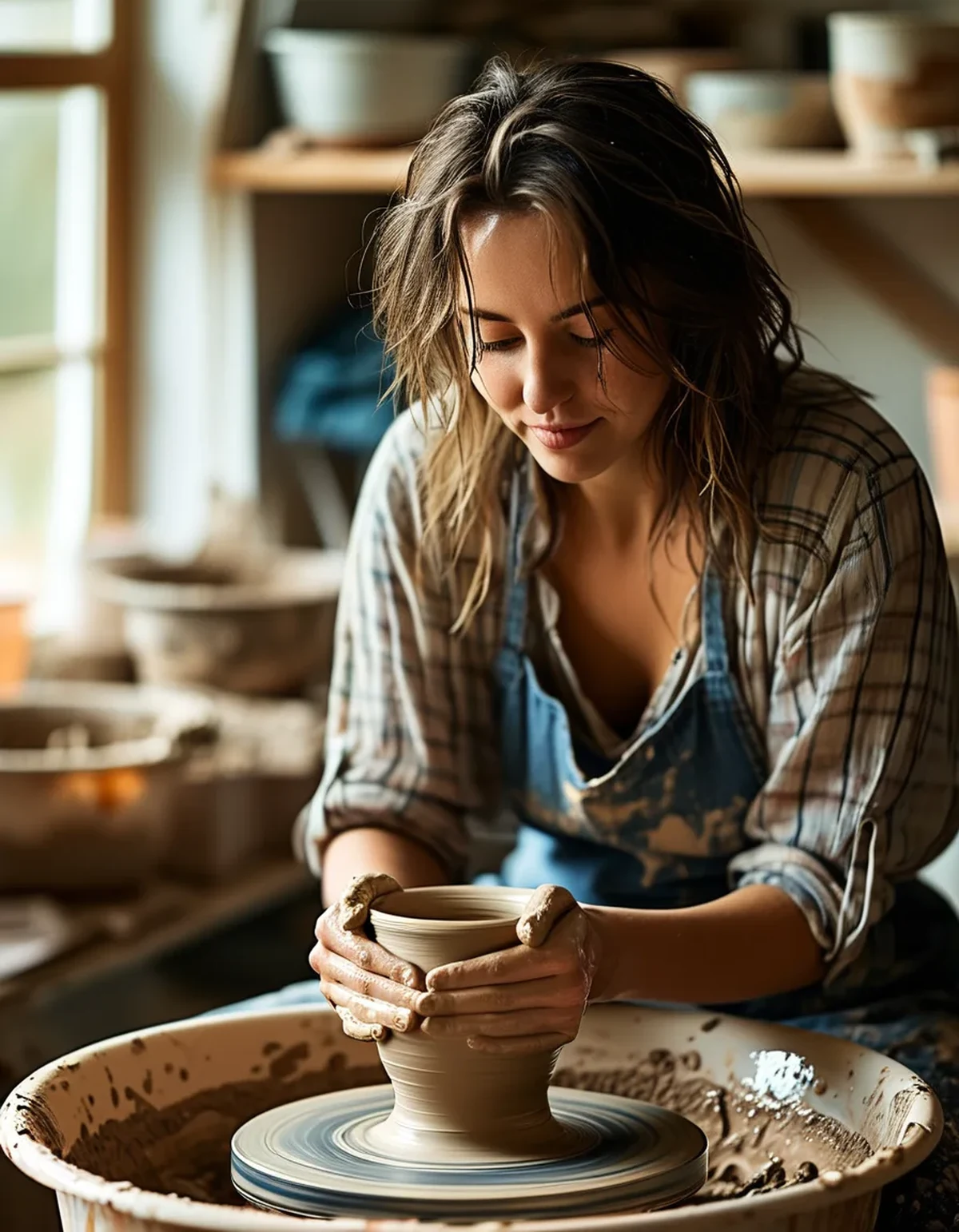
Work with the arms, not the fingers. Braced forearms against your body or the wheel edge transmit far more stable pressure than fingers alone, and stable pressure matters more than strong pressure. It also generates less heat, because you are not gripping.
Does the season change what your hands do to the clay?
Noticeably, and late summer into autumn is the most disruptive transition of the year.
Summer: warm studio, warm hands, clay softens fast. Working windows are short, drying is fast, and pieces can go leather-hard while you are still on the wheel.
Early autumn: this is the awkward one. Studio heating is not on yet, so mornings are cold, but afternoons can still be warm. The same clay body behaves like two different materials in a single day. Many studios see a spike in cracking and warping problems in September for exactly this reason.
Once heating starts: dry air arrives. Surfaces skin over quickly while interiors stay wet, which drives S-cracks and rim tearing.
Two adaptations that work through the shoulder season: wedge for slightly longer to even out temperature through the mass, and slow the drying deliberately with loose plastic once the piece is off the wheel — even when the studio does not feel dry to you.
FAQ: Hands and Clay Questions, Answered
Should I warm cold clay before throwing?
Bringing it into the room a few hours ahead is enough. Do not warm it aggressively — uneven temperature through the mass causes uneven stiffness, which is harder to centre than uniformly cold clay.
Why do my hands hurt after centring?
Usually because you are squeezing instead of bracing. Centring should come from your body position and locked arms, not grip strength. If your forearms burn, your technique is asking your hands to do your skeleton’s job.
Do gloves ever help?
Not for throwing — you lose the feedback that tells you what the wall is doing. Some potters use them for glaze mixing and reclaim work, where sensitivity matters less and skin protection matters more.
Does hand size matter for pot size?
Less than technique. Hand size influences comfortable pot diameter, but tool use — ribs, sponges on sticks — removes most of the limitation for larger forms.
TL;DR:
- Your hands change clay through heat, water film and pressure — and heat is the one nobody accounts for.
- Warm hands soften a wall and shorten your working window; cooling them in the bucket between pulls buys you an extra pull.
- Use less water, move slower — slick but not dripping is the target.
- Early autumn is the trickiest season, with cold mornings and warm afternoons making one clay body behave like two.
The clay is not being inconsistent. There are just more variables in the room than the bag it came out of — and a few of them are attached to you.
Keep Reading
This article is for general informational and styling purposes only. Fit, sizing, and product availability may vary.