What Actually Happens to Your Pottery in the Kiln (A Beginner's Guide)
Quick Answer: Pottery is fired twice: a bisque firing (around 1800°F) hardens raw clay into a porous, stable state, and a glaze firing (often 2200°F+) melts the glaze into glass and fuses it to the clay. Both stages take many hours to heat and cool safely — that’s why studios need days, not hours.
You trim your greenware, hand it to the studio, and a week later a finished mug appears. The in-between feels like a black box — here’s what’s actually happening.

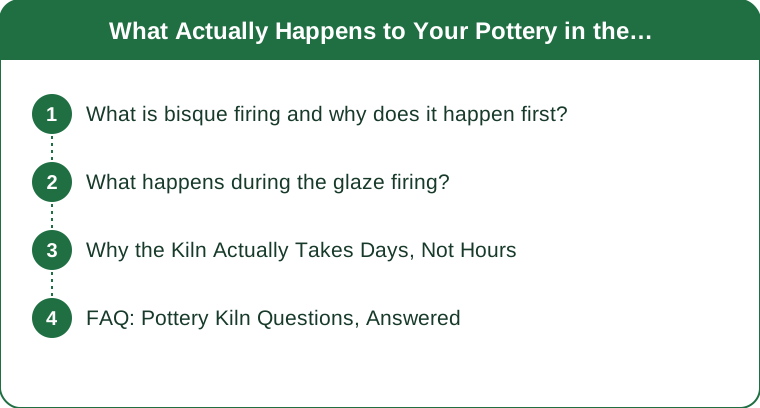
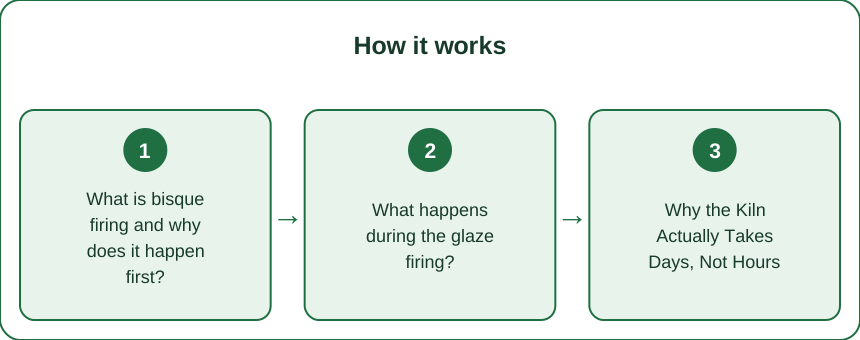
What is bisque firing and why does it happen first?
Bisque firing heats greenware (unfired clay) to around 1800°F, driving out remaining chemically-bound water and permanently hardening the clay into a stable, porous state called bisqueware. This step happens before glazing because bisqueware is sturdy enough to safely handle and glaze, while raw greenware would crumble or dissolve if dipped in wet glaze.
This is also the point of no return — once fired, clay can never be reshaped or dissolved back into workable clay again, unlike greenware.
What happens during the glaze firing?
The glazed bisqueware goes back into the kiln, typically to a higher temperature (2200°F+ for stoneware), where the glaze — essentially powdered glass and minerals suspended in liquid — melts and fuses permanently to the clay surface, creating the glossy, colored, waterproof finish you see on finished pieces.
This firing is more temperature-sensitive than bisque: too cool and the glaze stays rough or dull, too hot and it can run off the piece entirely.

Why the Kiln Actually Takes Days, Not Hours
Here’s what surprises most beginners: the kiln itself might only be at peak temperature for an hour or two, but the full cycle takes 12-24+ hours. Heating happens gradually to avoid thermal shock cracking the clay, and cooling is even slower — pieces removed too early from a still-hot kiln can crack from rapid temperature change.
Most studios build in a full day of cooling before it’s even safe to open the kiln, which is why your finished piece takes noticeably longer than the actual ‘firing’ time suggests.
FAQ: Pottery Kiln Questions, Answered
Can I speed up the firing process for a piece I need quickly?
Not safely — rushing the heat or cool cycle risks cracking pieces, including other students’ work sharing the same kiln load. Studios batch fire for good reason.
Why do some glaze colors look different after firing than they did wet?
Glaze color before firing rarely resembles the fired result — the chemical reaction during melting is what actually produces the final color, which is why studios provide fired glaze test tiles to preview results.
Is bisqueware waterproof?
No — bisqueware is still porous until glazed and glaze-fired. That’s exactly why the glaze firing step exists: it seals the surface and makes the final piece functional for holding liquid.
TL;DR:
- Bisque firing (~1800°F) hardens raw clay into stable, workable bisqueware
- Glaze firing (2200°F+) melts glaze into a permanent glass coating
- Full firing cycles take 12-24+ hours due to careful heating and cooling, not just peak temp time
- Bisqueware isn’t waterproof — glaze firing is what actually seals it
Next time you drop off greenware, you’ll know exactly what those two silent kiln cycles are actually doing.
Keep Reading
This article is for general informational and styling purposes only. Fit, sizing, and product availability may vary.