Why Does My Pot Go Oval Instead of Staying Round?
Quick Answer: A pot usually goes oval at one of three moments — when you lift it off the bat, when it dries unevenly, or when it is handled while leather-hard. Almost never on the wheel itself. The most common single cause is picking the pot up with your fingers around the rim, which squeezes it into an oval that the clay then remembers permanently.
You centered it. You pulled the walls even. You checked it with a needle tool and it was round.
The next morning it is an egg.
Roundness is not something you achieve once. It is something you keep losing, and each loss has a specific moment attached to it.
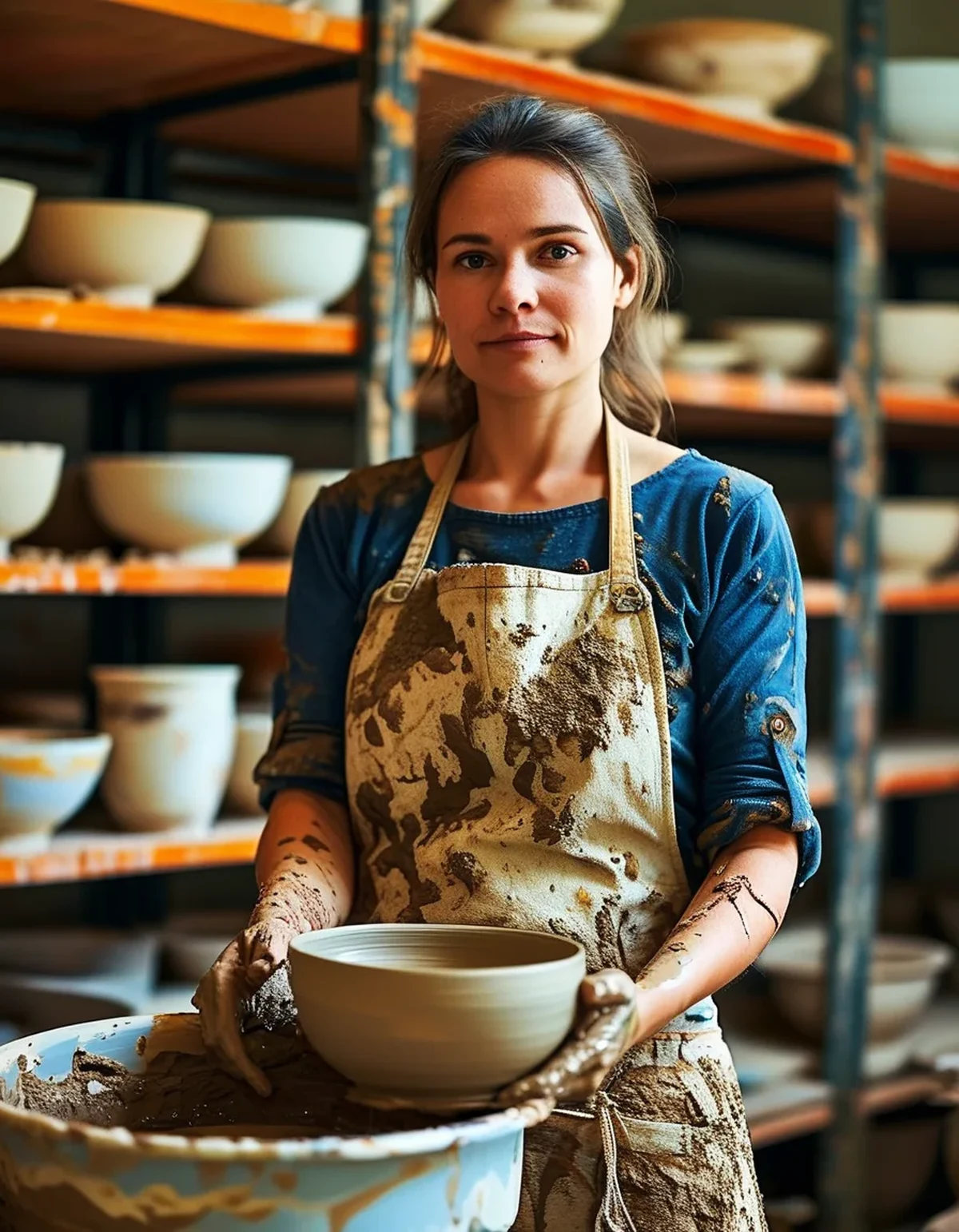
Where exactly does a pot go oval?
Almost never on the wheel. If the pot was truly round when the wheel stopped, the wheel is not your problem.
The roundness is lost at one of three specific moments, in this order of likelihood:
- The lift. Getting the pot off the bat or wheel head with your hands is the single biggest culprit, and it accounts for more oval pots than the other two causes combined.
- The dry. Uneven drying pulls one side in faster than the other. This one is invisible while it is happening.
- The handling at leather-hard. Picking a leather-hard pot up by its rim to trim it, move it, or admire it will deform it, and leather-hard clay is deceptive because it feels firm.
Knowing which one it was is easy in hindsight. If the oval appeared immediately after you took it off, it was the lift. If it appeared overnight, it was the dry. If it appeared after you moved it to a different shelf, it was the handling.
Why does lifting a pot ruin it so easily?
Because a freshly thrown pot has essentially no structural strength and your hands apply force at exactly the worst place.
Wet clay resists compression reasonably well and resists shear very badly. When you place a hand on either side of a rim and squeeze even gently to get a grip, you are applying pressure at two opposing points on a thin, unsupported circle. The circle flattens on that axis and bulges on the other. That is an oval, and it forms in under a second.
Worse, wet clay has memory. The particles have realigned in that deformed position. You can push it back and it will look round again, and then it will slowly return to the oval as it dries, because the internal alignment did not change when the shape did.
This is why the fix is not to lift more gently. It is to not lift at all.
Use bats. A pot that never gets picked up when wet cannot be squeezed when wet. If you have been throwing straight onto the wheel head and lifting off, switching to bats will solve more warping problems in one session than any other change you can make.
If I have to lift it, how do I do it?
Sometimes you have no choice — no bats, a stuck bat, a piece that needs to move. There are ways that work.
Wire under, then two flat hands. Cut cleanly with a wire pulled taut and flat against the wheel head, then slide both hands underneath the base rather than gripping the sides. You are carrying it, not holding it.
Use a lifter or two throwing sticks. Flat wooden or metal lifters slide under the base and let you move the piece with no side pressure at all.
Let it stiffen slightly first. Ten to fifteen minutes of air often takes a small pot from unliftable to liftable. It is not leather-hard, just less floppy.
If you must touch the rim, support the pot’s base with one flat hand and use the other only to steady, never to grip. The base hand is doing the work.
The common thread: the force goes under the pot, never across it.
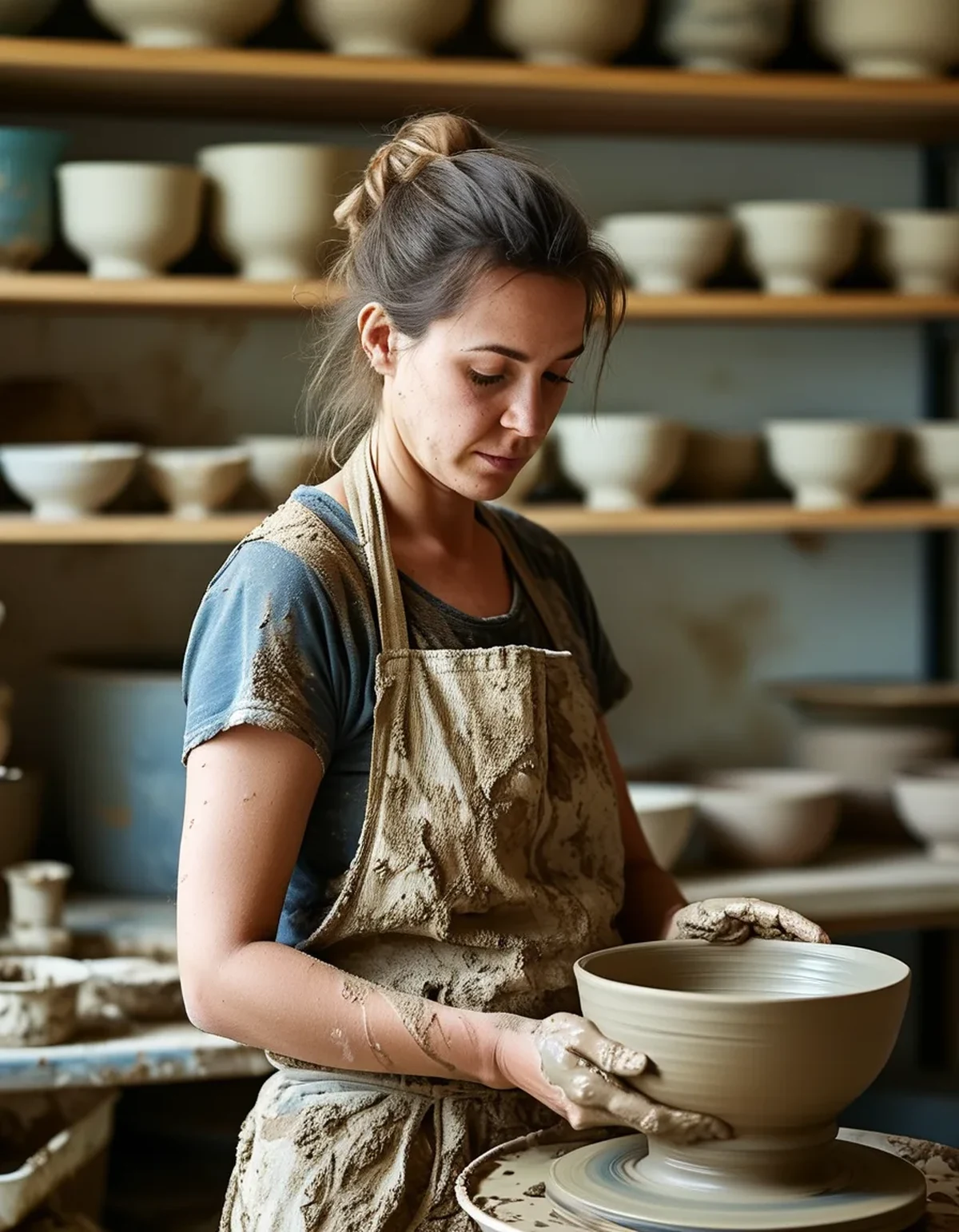
Why does drying make a round pot oval?
Clay shrinks as it dries — typically 5 to 8 percent from wet to bone dry. Shrinkage itself is fine. Uneven shrinkage is what causes the trouble.
If one side of your pot dries faster than the other, that side shrinks first and pulls the rest of the form toward it. The pot goes oval along the axis of the difference.
What makes one side dry faster:
- A draft. An open window, a door that opens often, a fan, or a heating vent. This is the number one drying cause and it is almost always a draft the potter did not think about.
- Sun through a window hitting one side of the shelf.
- Sitting against a wall, so the wall side has no airflow and the room side has plenty.
- Uneven wall thickness from the throwing itself. A thin side dries faster than a thick one, so a throwing inconsistency shows up as a drying problem.
The fix for all of these is the same: slow the whole thing down and even it out. Loose plastic over the pot for the first day, rotate the pot a quarter turn each time you walk past, and keep it away from anything that moves air.
What nobody tells you about leather-hard handling
Leather-hard clay feels solid. That feeling is a trap.
At leather-hard, the clay is firm enough that your fingers leave no mark, so you get no feedback that you are deforming anything. But the form can still flex, and the flex is now much more permanent than it was when the clay was wet — because there is less water available for the particles to slide back into place.
So the rim you gripped to carry a piece across the studio does not show fingerprints. It shows up three weeks later as a lid that does not fit.
Lids are where this becomes expensive. A pot and its lid are usually thrown on the same day and dried on the same shelf, but they have completely different shapes and dry at completely different rates. Then somebody carries the pot by the rim. The pot goes very slightly oval, the lid stays round, and the two no longer speak to each other. Since the deformation is only a millimeter or two, it is invisible until fitting time.
Rule for leather-hard: carry pots from the base or with two flat hands underneath. Never by the rim, never by a handle, never with one hand. Handles are the most tempting and the worst, because a handle is attached to the thinnest part of the wall.
Does the clay body itself matter?
Yes, and it explains why one person in a class has this problem constantly and the person next to them never does with the same technique.
Grogged and stoneware bodies hold their shape better. The grog particles create an internal structure that resists deformation and also lets water escape more evenly, which helps with the drying cause too. If you warp things constantly, moving to a grogged body is a legitimate fix.
Porcelain is the opposite. It is plastic, fine-particled, and remembers everything. Porcelain will go oval from handling that a stoneware pot would shrug off, and it will keep moving during firing in ways that stoneware does not. Most people who have suddenly started warping everything have recently switched to porcelain.
Very soft, over-wedged, or over-watered clay deforms more easily regardless of body. If your clay is wetter than usual because you have been throwing with a lot of water, everything in this article gets worse.
And wall thickness interacts with all of it. A thin-walled porcelain bowl is the maximum difficulty version of this problem. A thicker grogged mug is nearly impossible to warp by accident.
FAQ: Oval Pots, Answered
Can I fix an oval pot once it has gone?
At soft leather-hard, sometimes. Gently press the long axis while supporting the short one, then dry very slowly under plastic. The success rate is maybe half, and the memory often reasserts itself in the firing. At bone dry, no — you would just crack it.
Does the kiln make pots go oval?
The kiln reveals ovals more than it creates them. Firing amplifies existing stress, so a pot that was one millimeter out at bone dry can be three millimeters out after firing. The exception is a pot fired too close to a vigorous element or in an uneven kiln, which can add its own distortion.
Why do my bowls warp but my mugs do not?
Open forms are far more vulnerable than closed ones. A mug’s narrow rim and taller walls are structurally braced. A wide bowl is a large unsupported circle, which is the least stable shape you can throw. Wide shallow bowls are the hardest form in this respect.
Should I dry pots upside down?
For bowls and plates, yes, once they are firm enough to move safely. Inverting them puts the vulnerable rim against the shelf where it cannot flex, and it evens out the drying between the inside and the outside. Just make sure the rim sits on something flat and clean.
TL;DR:
- Roundness is almost never lost on the wheel — it is lost at the lift, in the dry, or during leather-hard handling.
- Gripping a wet rim to lift a pot creates an oval in under a second, and the clay remembers it even after you push it back.
- Throw on bats and the single biggest cause disappears entirely.
- Uneven drying, usually from an unnoticed draft, pulls one side in faster than the other — cover loosely and rotate the pot daily.
- Leather-hard clay feels safe and is not; carry from underneath, never by the rim or handle.
If you want one change to make this week, it is bats plus loose plastic. Between them they cover the two causes responsible for most oval pots, and neither requires improving your throwing at all. Roundness turns out to be less about skill at the wheel and more about what happens to the pot in the twenty-four hours after you stop touching it.
Keep Reading
This article is for general informational and styling purposes only. Fit, sizing, and product availability may vary.