Why Mug Bases Crack in an S Shape, and How to Stop It
Quick Answer: S-cracks happen because the clay at the base of a thrown pot never got compressed — its particles were left loose and spiral-aligned from centering, and water pooled there through the throw. As the piece dries, the rim and walls shrink first and pull against a base that is wetter, thicker, and weaker, and it tears along the spiral, producing the S. Prevention is almost entirely front-loaded: compress the base immediately after opening, keep standing water out of the pot, and dry the piece so the base is not the last thing to catch up.
It is the most preventable crack in pottery, which is also what makes it the most frustrating one to keep getting.
What is an S-crack, and why that shape?
It is a tear through the center of the base, and the S is your centering spiral showing itself.
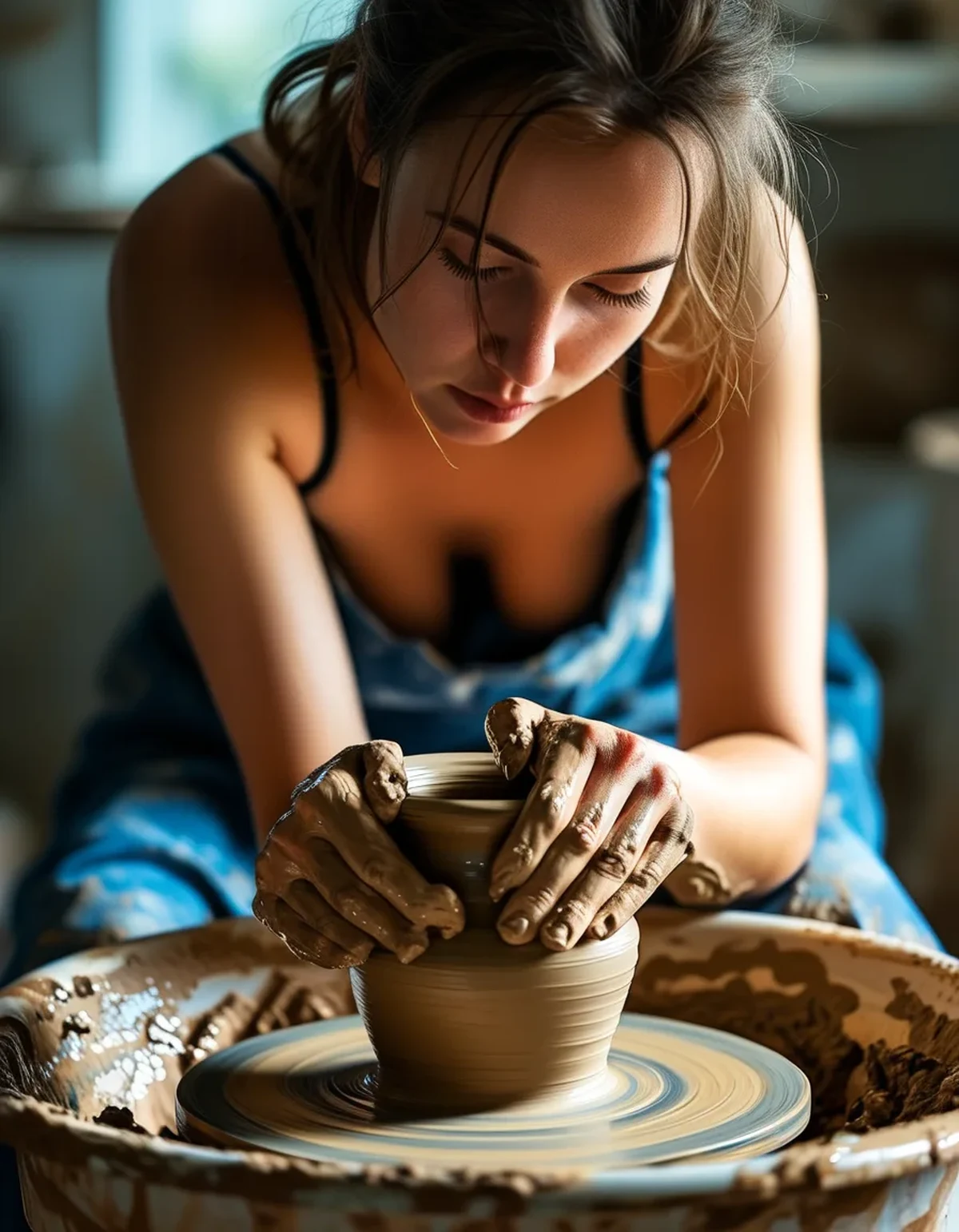
Clay is made of microscopic flat platelets. When you wedge and then center a lump on a spinning wheel, those platelets get swept into a spiral orientation around the axis of rotation — think of the swirl frozen into the bottom of the ball of clay. In the walls, the act of pulling reorganizes and compresses the platelets into alignment along the wall. The base gets no such treatment unless you give it deliberately.
So the finished pot has walls of well-aligned, compressed clay and a base of loosely stacked platelets still holding their spiral arrangement. When drying shrinkage puts the base under tension, it fails along its weakest paths — the boundaries between those spiral-swept zones — and the tear traces a lazy S through the center.
The crack is a map of what the clay was doing when you stopped working it.
This is also why the S-crack is so specifically a wheel-throwing problem. Slab-built and pinched pieces fail in other ways, but their bases were compressed by the very act of making them. The wheel is the only process that lets you build an entire pot while touching the inside bottom for a grand total of two seconds — and plenty of beginners do exactly that, because nobody told them the floor of the pot was a structural element rather than just the part the walls stand on.
When in the process is the crack actually created?
On the wheel first, during drying second, and the kiln merely publishes the result.
During the throw, two things set the trap. First, the base never gets compressed: after opening, the natural urge is to get straight into pulling walls, so the floor stays loose. Second, water pools there. Every pull sends slip and water down the inside, and a puddle left standing soaks into the floor, making it the wettest, softest clay in the piece. Extra water means extra shrinkage coming — the base has committed to shrinking more than the walls, later than the walls.
During drying, the geometry does the rest. Rims and walls are thin and exposed on both faces; they dry and shrink first. The base is thick, often sitting flat on a board that blocks one whole face, so it dries last. A shrinking ring of wall clamps down around a still-wet floor, and the floor — loose-particled, waterlogged, weakest — goes into tension it cannot hold. The tear may open invisibly here, as a hairline you would need raking light to catch.
In the bisque firing, the remaining water leaves, shrinkage completes, and the hairline becomes the honest, open S you find on the shelf. The kiln gets blamed because the kiln is where you saw it, but the kiln only finished a sentence the wheel started.
The practical conclusion: by the time the piece leaves the wheel, most of its S-crack destiny is already decided. Which is good news, because the wheel is where you have the most control.
5 Habits That Practically Guarantee S-Cracks
Pulling walls the moment the floor is opened. The floor gets no compression, ever, and keeps its loose spiral structure through the whole life of the pot. This is the root habit behind most S-cracks.
Letting water stand in the bottom between pulls. Every minute the puddle sits, the floor drinks. A soaked base is a base that will shrink more than everything above it. Sponge the pool out after every pull or two, not just at the end.
Throwing off the hump without extra base care. Throwing small pieces off a big cone of clay is efficient and wonderful, but the base of each piece is cut from mid-cone clay that got even less compression than usual, with a twist from the wire-off. Off-the-hump pieces need the compression step more, and usually get it less.
Fast, right-side-up drying. A pot drying upright in moving air dries from the rim down, maximizing the shrinking-ring-around-wet-floor problem. Speed makes every drying differential worse.
Leaving the base twice the thickness of the walls. A thick base is a slow-drying base, and trimming it thin later does not undo the loose particle structure — trimming removes clay, it does not compress what remains. Even thickness from the start beats heroic trimming at leather hard.
Every one of these habits is invisible in the finished greenware. The pot looks fine, right up until it does not.
The prevention routine that works
Sixty seconds on the wheel, plus two easy habits after it.
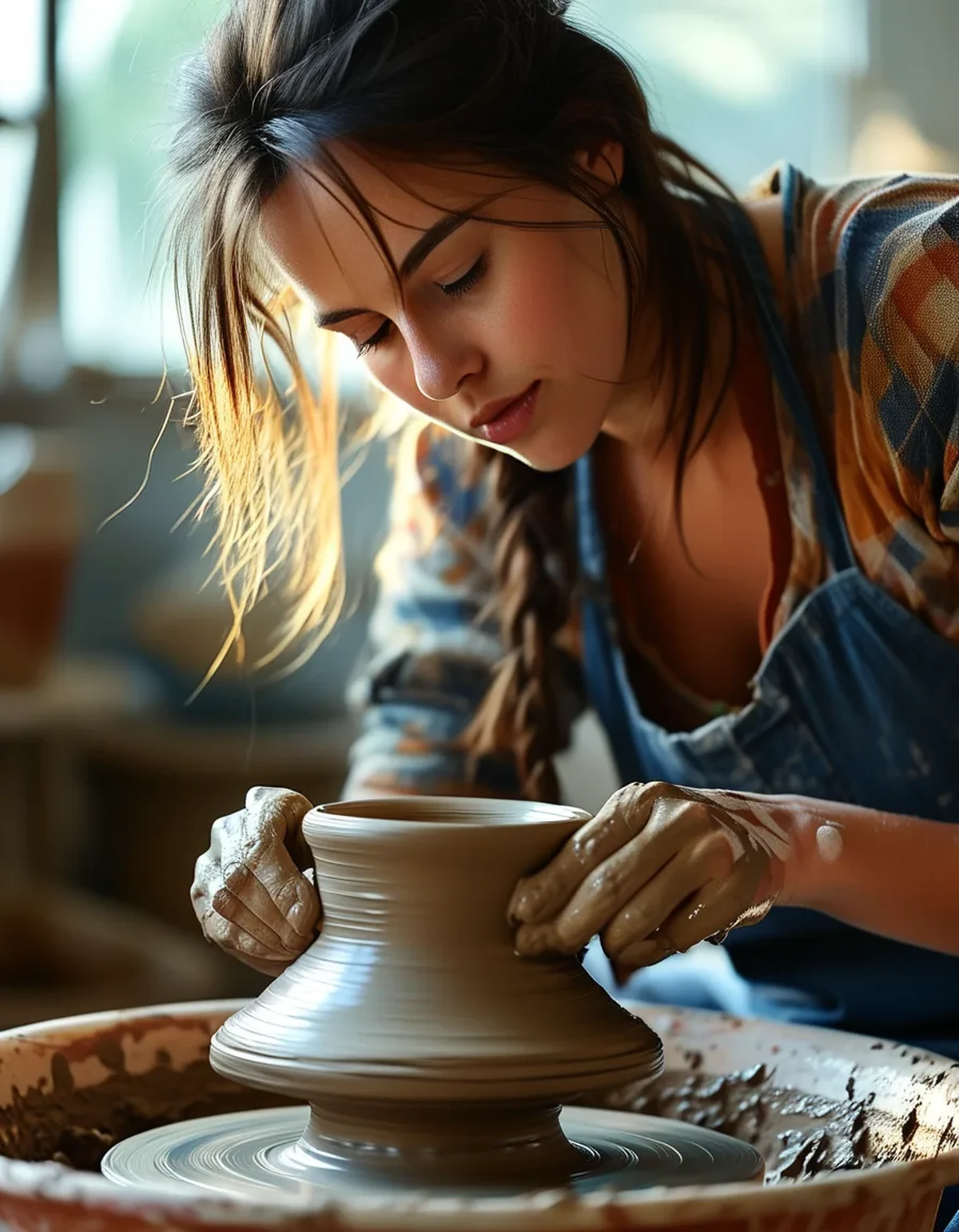
Compress immediately after opening. Before any pull: with the wheel spinning slow, press the floor with two fingers working from center outward, twice across. Then repeat with a rib — the flat tool spreads pressure and leaves the floor dense and slightly burnished. You are re-stacking the platelets flat and knitting the spiral zones together. This single minute removes most of the risk.
Compress again after your last pull. The pulls have been dragging water and slip downward the whole time; one more pass with the rib, plus a thorough sponge-out of any standing water, closes the throw properly. Check the corner where floor meets wall — water hides there.
Wire off cleanly and once. Multiple hesitant wire passes shear the base unevenly. One smooth pass with the wire held taut, wheel spinning slow.
Dry the piece upside down once it can hold its shape. Rim-down on a dry, unsealed board equalizes the race: the base finally gets air while the rim, now against the board, slows down. If the form will not sit rim-down, tent the whole piece loosely in plastic so nothing gets to sprint ahead. Slow and even always beats fast.
Trim to even thickness. At leather hard, aim for a base that matches the walls, and give the trimmed foot a light compression with a finger or the round of a tool as a final pass.
Groggier, more open clay bodies forgive drying differentials better than fine porcelains — if you are learning, learn on a forgiving body and save the porcelain for when compression is a reflex.
FAQ: Base Crack Questions, Answered
Can I rescue a piece with a hairline S-crack at the greenware stage?
Rarely, honestly. Working magic-water or paper-clay slip into the crack sometimes survives the bisque, but the loose structure that caused the tear is still there underneath, and the crack usually reopens wider. Better to recycle the clay and keep the lesson.
Does drying slower always prevent S-cracks?
Slower helps everything, but it cannot fix an uncompressed, waterlogged base — it just delays the reveal. Compression on the wheel is the cause-level fix; slow drying is the insurance layer on top of it.
Why do my mugs crack but my bowls never do?
Geometry. A mug is a narrow cylinder: water pools hard in the small base, and the tall wall shrinks as a tight clamping ring. A wide bowl sheds water up its curve, dries more evenly, and its shallow floor got more incidental compression during opening. Mugs are the S-crack stress test.
Does the clay body matter?
Yes — fine, tight bodies like porcelain shrink more and tolerate differential drying worst, so they punish sloppy base habits hardest. Stoneware with some grog is the forgiving middle. But no body is immune to an uncompressed floor; the routine stays the same everywhere.
TL;DR:
- The S-crack is the centering spiral tearing open: the base kept loose, spiral-aligned particles while the walls got compressed by pulling.
- It is created on the wheel — uncompressed floor plus pooled water — revealed by drying, and merely published by the kiln.
- Prevention is front-loaded: compress the floor after opening and after the last pull, sponge out standing water, wire off once, cleanly.
- Dry rim-down or tented so the base is not the last thing to shrink, and trim to even thickness.
Next session, give every base the two-pass finger-then-rib compression before the first pull. It costs one minute per pot and ends the mystery.
Keep Reading
This article is for general informational and styling purposes only. Fit, sizing, and product availability may vary.